What Is Brand Activation? A PR Strategy That Turns Experiences into a Reason to Choose Your Brand
- カテゴリ:
While more people are hearing the term “brand activation,” some may still be unclear about what it actually involves and how it differs from advertising or campaigns.
This article provides a systematic explanation of brand activation—an approach that deepens consumers’ relationship with a brand through “experiences”—from the basic concept to representative methods and key points for PR planning. It is intended to help marketing and PR professionals facing challenges such as “We have awareness but are not chosen” or “Even if we run events, they do not become a topic of conversation” gain actionable ideas they can implement in their own organizations.
What Is Brand Activation? Initiatives That Move the Relationship with Your Brand Through Experiences
Brand activation is a marketing approach in which companies provide consumers with valuable experiences to energize and strengthen the brand. First, let us take a closer look at the core ideas behind it.
A Mindset That Leads Not Only to Awareness, but Also to Participation, Empathy, and Purchase
One of the major appeals of brand activation is its ability to shift customers from being “recipients of information” to “participants in an experience.” Today’s consumers are surrounded by information, and simply knowing a product name may not be enough to lead to a purchase decision. Creating opportunities for people to engage deeply with a brand’s philosophy and worldview through experiences is likely to be the key to success. By actually touching a product or participating in brand-hosted events, customers are more likely to develop positive feelings. Emotional responses such as “That was fun,” “I was surprised,” or “This suits me” can spark empathy and may lead to purchasing behavior and repeat purchases.
How It Differs from Advertising and Campaigns
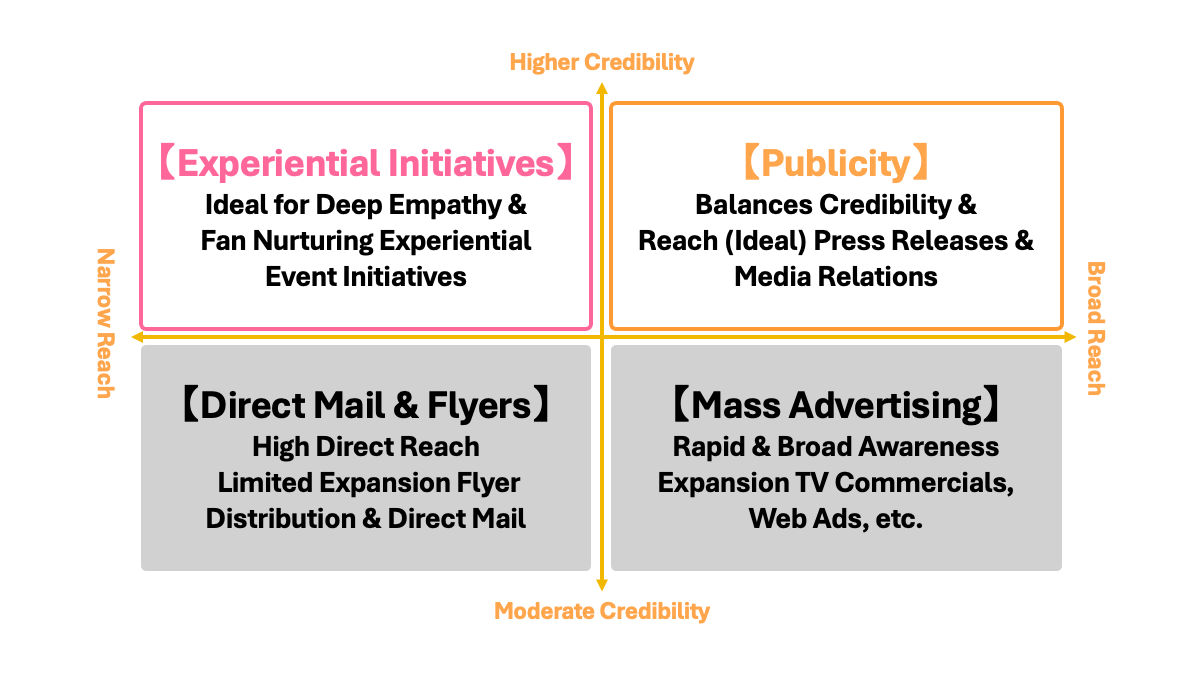
The difference from traditional advertising and typical campaigns lies in the direction of communication. TV commercials and web ads primarily deliver information one-way, from companies to consumers. While they are excellent for rapidly expanding awareness to many people, messages are easily overlooked, so it tends to take time to foster deep understanding and affinity. Brand activation, by contrast, is designed on the premise of two-way communication. One of its defining features is that consumers engage of their own volition and invest time to experience the brand’s appeal firsthand. Rather than attracting people through low prices, as with temporary discount campaigns, it draws them in through the brand’s essential value, making it well-suited to cultivating fans over the medium to long term.
From a PR Perspective, Designing “Talk-Worthy Experiences” Is Essential
To make brand activation successful, it is not enough to simply hold an event that is fun. From a PR perspective, the key is how to design a “talk-worthy experience” that participants will naturally want to share with others. It is important to create a structure in which social posts and media coverage arise organically from the experience itself. For example, you may prepare hooks that people want to talk about—such as striking spatial design that begs to be photographed, special novelty items available only to participants, or a message that speaks to a social issue. Even those who could not attend in person may feel the brand’s energy through social media and news, potentially expanding the value of the experience even further.
Why Brand Activation Is Needed Now
Why are so many companies now beginning to focus on brand activation? Behind this trend are changes in the media environment and a major paradigm shift in consumers’ values. Let us unpack what is changing, step by step.
| Social changes | Consumer psychology and behavior | Impact on brands |
|---|---|---|
| The acceleration of information overload | People skip or block ads they are not interested in | Simply gaining awareness is less likely to be remembered |
| From product consumption to experience consumption | People seek emotional richness through experiences rather than the joy of ownership | Differentiation based only on functional value has become more difficult |
| The spread and normalization of social media | People trust and use individuals’ genuine impressions and word of mouth as information sources | UGC has become more influential than company-issued messages |
One-Way Advertising Alone Makes It Hard to Deepen Brand Understanding
With the widespread use of smartphones, consumers encounter large amounts of information every day. People have become more selective about what is useful to them, and one-way advertising messages from companies are increasingly less likely to reach them. Even if an ad succeeds in building awareness, it is not uncommon for it to be forgotten just minutes later. Simply promoting functional benefits or low prices makes it difficult to communicate differences from competitors. Deeper stories—such as a brand’s history, craftsmanship, and stance toward society—cannot be fully conveyed within a short ad slot, and new touchpoints are increasingly needed to encourage people to engage with the brand more thoughtfully.
Consumers Value Experiences and Empathy More Than Products
Another factor is the shift in consumption trends from “things” to “experiences.” In today’s world, where material abundance is largely fulfilled, consumers increasingly tend to value experiences and emotional satisfaction gained through products rather than mere ownership. Products are also being chosen from the perspective of “How will choosing this brand enrich my life?” Brand activation is one approach that can meet these consumer needs for “experiential value.” Experiencing a brand’s worldview with all five senses and enjoying the time itself can become added value. Customers are likely to empathize not with product specs, but with the emotions they felt through the experience, and come to support the brand.
Social Media Has Made It Easier for Personal Emotional Experiences to Spread
Today, as social media is said to have become part of everyday infrastructure, the influence of real personal stories and word of mouth (UGC) in Japan has grown compared to the past. Consumers have begun to trust authentic voices posted by ordinary people like themselves more than advertising copy issued by companies, and to use them as a reference for action. Customers moved by brand activation may proactively share their experiences on their own social accounts. When one person’s experience spreads to many through social media, it can generate buzz without massive ad spend. This environment—where such a “chain of word of mouth” is more likely to occur—is also one factor that increases the value of activation initiatives.
Business Challenges That Brand Activation Can Solve
Brand activation is said to have the power to break through various barriers in a company’s marketing activities. Rather than stopping at awareness expansion, what approaches are possible for deeper, more complex challenges?
| Challenges | How activation can address them | Expected outcomes |
|---|---|---|
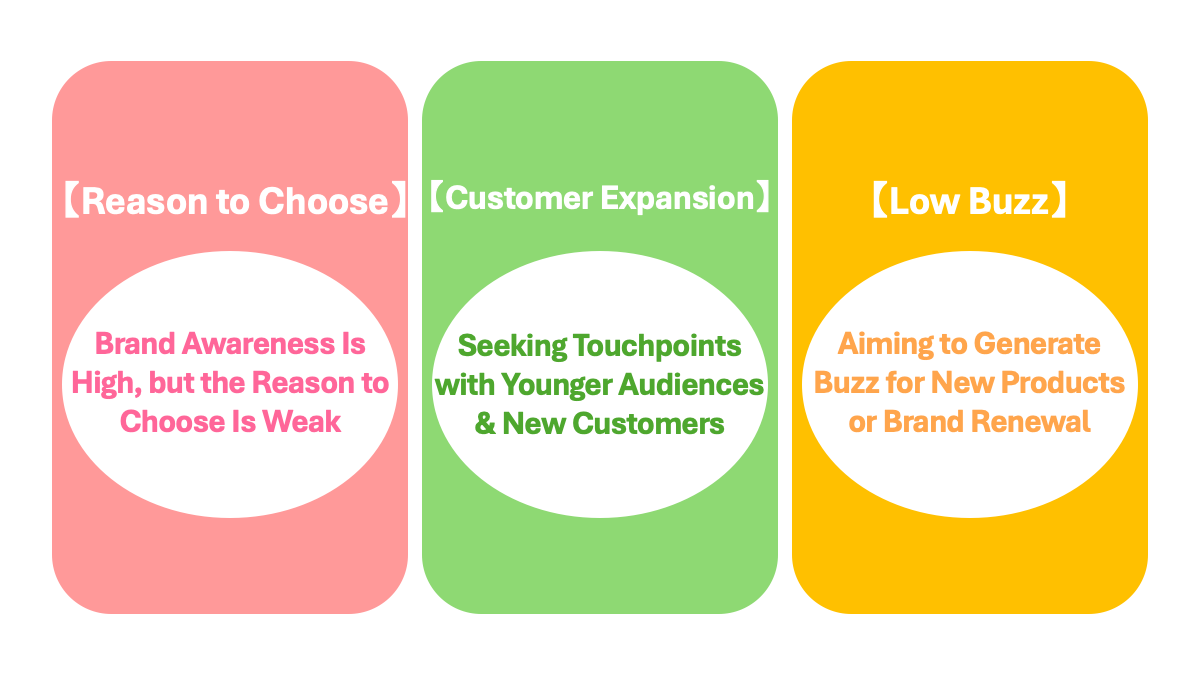
| Too many competitors, with no reason to be chosen | Build brand affinity through emotionally stirring experiences | Increase in brand-specified purchases Improved LTV (customer lifetime value) |
| Unable to develop a younger customer base | Run participatory events that blend digital and real-world experiences | Acquire new customer segments Rejuvenate the brand |
| Even after a renewal, it does not become a topic of conversation | Design highly shareable experiences with a PR perspective | Gain media exposure Trend on social media |
Your Brand Has Awareness, but a Weak Reason to Be Chosen
The concern “People know the name, but when they get to the shelf, they choose a competitor” is a common case in mature markets. It can be seen as a phenomenon that occurs when the brand name exists in customers’ minds, but an emotional bond has not formed in their hearts. Brand activation is one way to strengthen that bond. If customers can empathize with the brand’s philosophy through an experience, it may shift to a position of “a brand that is special to me.” When they later see the product in-store, the positive feelings from the experience may resurface, leading them to pick up the brand almost unconsciously. It is one approach to escaping price competition and building a reason to be chosen.
You Want to Create Touchpoints with Younger and New Customers
The longer a brand has been loved, the more it tends to face the challenge of an aging customer base. Younger generations have fewer opportunities to encounter traditional mass advertising, and new approaches are required. Participatory brand activation initiatives that capture younger audiences’ interest can be an effective option. By offering interactive experiences using the latest digital technologies and creating photogenic spaces, you may be able to naturally draw in segments that typically have no touchpoints with your brand. By removing overt selling and letting people enjoy it first as entertainment, you can lower psychological barriers and make it easier to welcome them into the brand’s world.
You Want to Generate Buzz Around New Products or a Brand Refresh
When launching a new product or refreshing a brand logo or concept, it is a critical moment when you want to leave a strong impact on society. However, simply distributing a press release or running ads may not be enough to capture the attention of the media and consumers. By creating “news through an experience” via brand activation, you may be able to address these challenges. If you prepare an innovative concept that people cannot help but want to try, it is more likely to become a subject for web media and TV coverage. Combined with visitors’ social posts, it may also help establish a strong, widespread impression of the new brand presence.
[Related Article] What Is Rebranding? Explaining How to Proceed for Success and When to Implement It « Column
Representative Brand Activation Initiatives
Brand activation takes many forms, and it is important to choose the right approach based on your objectives and offering. Here, we introduce representative methods that have been adopted by many companies.
| Type of initiative | Features and benefits | Best use cases |
|---|---|---|
| Pop-up events and exhibitions | Express a unique worldview through the entire space and deliver deep immersion | Brand rebranding, anniversary milestones, flagship product PR |
| Sampling and touch-and-try | Let people directly confirm functionality or taste, reducing purchase anxiety | New product launches, PR for offerings where you want people to feel the functionality |
| Social media and UGC creation campaigns | Engage a wide audience online without needing a physical venue | Approaching digital natives, creating ongoing buzz |
| Media and influencer experience sessions | Rapidly spread highly credible information through influential people | Embargo lift timing, PR for products that require expert explanation |
Deliver Your Worldview Through Pop-Up Events and Experiential Exhibitions
Limited-time pop-up events and experiential exhibitions are among the most classic brand activation methods. By creating a special place distinct from everyday spaces, you can potentially draw visitors into the brand’s worldview. A key feature is that everything—from decor and music to staff hospitality—can be designed to align with the brand’s philosophy. Experiences in such real-world spaces also tend to remain in customers’ memories. Combining limited-edition product sales or special workshops can also motivate people to visit. By using event spaces in commercial facilities or high-traffic street-level locations, you can also expect an effect of engaging passersby who are potential customers.
Let People Experience the Appeal Through Sampling, Tastings, and Touch-and-Try
For offerings such as food and beverages, cosmetics, and the latest home appliances—where the value is difficult to convey without trying—sampling and touch-and-try are effective methods. Beyond handing out items on the street, providing experiences in places aligned with the target audience’s lifestyle, such as cafés or salons, makes it easier for people to encounter the product in a more natural way. It is also important to enhance the quality of the experience—for example, by sharing the development background as a story or having professional staff teach correct usage—rather than simply handing over the product. Once people feel even once that it is “delicious” or “easy to use,” the psychological hurdle to purchase tends to drop significantly. Deeper brand understanding through experience is likely to lead to continued use.
Build Empathy and Interest Through Social Posting and UGC Creation Campaigns
In addition to real-world events, brand activation that leverages digital spaces is becoming increasingly important. Campaigns in which users post photos or stories with a designated hashtag have a low barrier to participation and are one method for building momentum nationwide. The key point of this approach is that it provides opportunities for users to talk about the brand in their own words. By sharing memories and unique ways of enjoying the brand, a community can form among users and the circle of empathy may expand. Leaving room that the company cannot fully control can sometimes become the trigger for generating genuine excitement.
Press Events for Media and Influencer Experience Sessions
Before implementing initiatives for the general public, it is also important to involve people who serve as hubs for information dissemination. By inviting media journalists and influential creators and holding a special event where they can experience the brand’s world early, it becomes easier for passionate articles and posts to emerge. Rather than focusing solely on product explanations, it is advisable to prepare unique angles and photo spots that they will want to share with readers and followers. Information shared through influencers feels more relatable to followers and can become a driving force that accelerates subsequent promotions for the general public.
【Related Article】 What are Influencer Measures from a PR Perspective? Explaining Design Without Failure and the Concept of Utilizing PR Agencies « Column
Key PR Planning Points for Success
To ensure brand activation does not end as merely a “fun event” but leads to business results, meticulous PR planning is required. We explain strategic points for increasing brand fans through experiences, by taking a bird’s-eye view from the planning stage onward.
| Key steps for success | Specific actions | Common pitfalls |
|---|---|---|
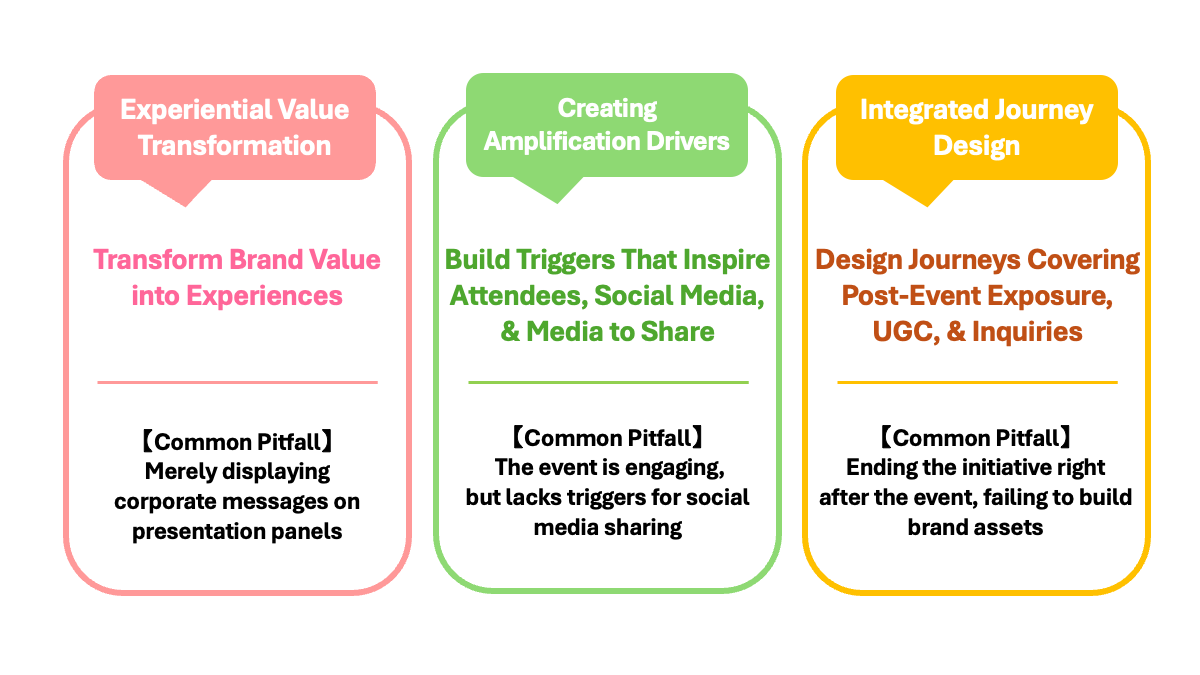
| Turning value into an experience | Convert the message you want to convey into content that can be enjoyed with all five senses | Only displaying what the company wants to say on panels |
| Creating mechanisms for sharing | Prepare photo spots and surprising elements people will want to talk about | The event is fun, but there is no trigger to post on social media |
| Integrated journey design | Align post-experience social sharing, media exposure, and traffic to the website | It ends after the event and does not become an ongoing asset |
Convert the Value You Want to Communicate into an Experience
The first step is to convert the abstract message the brand most wants to convey into a concrete experience that consumers can enjoy intuitively. For example, if you want to communicate “environmentally friendly,” rather than only writing it in a brochure, you might hold a workshop where participants create original items using reclaimed materials—so they can feel the philosophy through action. Customers are not coming to study; they are coming to enjoy their time. It is important to strike the right balance: ensuring entertainment value while embedding the brand’s thinking at its core. It is advisable to refine the plan by working backward from what emotions and realizations you want participants to take away after the experience.
Create Mechanisms That Visitors, Social Media, and the Media Will Want to Talk About
Once you have created a place for the experience, the next step is to build in mechanisms that spread that energy outward. People tend to share information when they encounter surprises beyond their expectations or discoveries they want to tell someone about. Intentionally designing this “motivation to talk (hook)” is important from a PR perspective. Approaches vary: installing an overwhelmingly visual monument, preparing a unique experience, or presenting an angle that captures social trends. It is necessary to anticipate in advance the moments when visitors will pull out their smartphones to take photos and the keywords journalists will want to use as headlines, and to place them naturally within the experience.
Design the Post-Implementation Path: Exposure, UGC, and Inquiry Flows
To ensure brand activation becomes an ongoing brand asset rather than a one-off initiative, an integrated design that connects the dots is required. It is advisable to map out post-implementation pathways in advance—such as how to leverage social UGC generated at the event and how to connect media exposure to sales. For example, you might provide event attendees with a dedicated online coupon to drive them to your e-commerce site, or publish a special site that aggregates UGC generated on social media and link it with in-store promotional materials. By connecting real-world experiences, digital initiatives, in-store promotions, and PR activities into a single line, the brand experience will become more firmly established.
When You Should Consult a PR Agency for Brand Activation
Brand activation requires a wide range of expertise, from planning and spatial design to building a PR strategy. If it is difficult to complete everything with in-house resources alone, seeking support from an external PR agency can be an effective option for success.
| Your in-house challenges | Solutions a PR agency can provide |
|---|---|
| Even if we run events, only insiders get excited, and it does not become a public topic | Context-building that captures social trends, and designing information dissemination across media and social platforms |
| Initiatives across real-world, digital, and in-store channels are moving separately | Integrating a consistent communication strategy from an overall optimization perspective |
| We understand the product’s strengths, but cannot come up with exciting experience concepts for consumers | Planning capability to translate brand value into entertainment and unique experiences |
Even If You Run Experiential Initiatives, They Do Not Lead to Buzz
Many companies have experience running pop-up events or campaigns, only to see attendance fail to grow and social response remain limited. One factor may be a lack of “information distribution design” to spread the experience to the broader public. PR agencies often have know-how on how to communicate in ways that make media want to cover it and how to encourage users to share on social media. By involving PR professionals from the planning stage, it becomes easier to incorporate angles that increase news value and hooks for sharing, which can raise the likelihood of generating buzz.
【Related Article】 What is News Value? Explaining How to Create and Deliver Information That Gets Picked Up by the Media « Column
Unable to Integrate Events, Social Media, and Media Exposure
When internal organizational structures are siloed, event teams, social media teams, and PR teams may act separately, making it difficult to generate synergy across initiatives. From the customer’s perspective, the experience can feel fragmented, and there is a risk that the brand will not leave a consistent impression. PR agencies strong in brand activation play a role in integrating communication across diverse channels. Starting from the real-world event experience, they work closely with companies to link media exposure and social UGC and connect it to final purchasing behavior. They can support building a structure that maps the overall roadmap and controls consistent messaging.
[Related article] What are the key points for operating a corporate account? Explaining design methods to be loved by fans from a PR perspective « Column
You Want to Create Concepts That Let Consumers Experience Brand Value Firsthand
In-house employees often understand a product’s functionality and history best, but translating that into an “experience consumers can enjoy” requires a different skill set. In some cases, the company perspective becomes too dominant, resulting in exhibitions or events that feel like one-way messaging. PR agencies continually engage with consumer perspectives and what society is interested in. Their strength lies in the ability to reassess a brand’s appeal objectively and elevate it into experiential content that the target audience intuitively feels is “interesting” and “worth joining.” If you want to incorporate fresh ideas that are difficult to generate in-house, they can become a reliable partner.
To elevate brand activation into a social movement, specialized PR expertise is essential. With SUNNY SIDE UP’s “PR Corporate Communications” services, we provide end-to-end support—from context design that captures social currents to creating buzz. For specific approaches grounded in PR thinking, please see the service details page below.
Conclusion: Build Deep Relationships with Customers by Providing Experiences
Below is a summary of the key points for making brand activation successful discussed in this article. The essence of brand activation is not one-way information dissemination from a company to customers, but providing value that is created when customers themselves participate and experience it. In addition, by planning PR with social sharing before the event and media exposure afterward in mind—rather than ending with a one-off event—you can greatly expand the impact of the initiative. Furthermore, rather than operating physical stores, digital spaces, and PR activities separately, an integrated approach that links them and builds them up as a medium- to long-term brand asset is required. By carefully designing experiences that move customers and make them want to talk about them, let us move forward in building brands that continue to be loved for years to come.
For “brand activation” to successfully turn brand value into experiences and encourage concrete consumer actions, meticulous communication design is essential. At SUNNY SIDE UP, leveraging our PR expertise, we provide comprehensive proposals for plans that create optimal experiential value by integrating real and digital. We also welcome consultations such as “We are not sure where to start” and “We want to implement more effective initiatives.” We will work closely with you to identify solutions tailored to your challenges, so please feel free to contact us via the inquiry form.
CONTACT « SUNNY SIDE UP GROUP Inc.