How to Succeed in Summer Event Promotions: Explaining PR Strategies That Leave a Lasting Impression
- カテゴリ:
While summer is a season packed with events, simply gathering people may result in nothing more than a transient burst of excitement. Even with significant budget and effort, you may only attract customers seeking coupons, discounts, points, or free gifts, who might forget the brand name just days or weeks later. The true goal of summer promotions should not be a temporary “buzz,” but rather the creation of new usage occasions for products and the forging of long-term bonds between the brand and its customers.
In this article, we will analyze common factors behind failed promotions and explain how to design memorable initiatives by incorporating a PR perspective. Let’s explore the secrets to elevating an event into an unforgettable brand experience by capturing social context and empathizing with the emotions of participants.
What Is Summer Event Promotion?
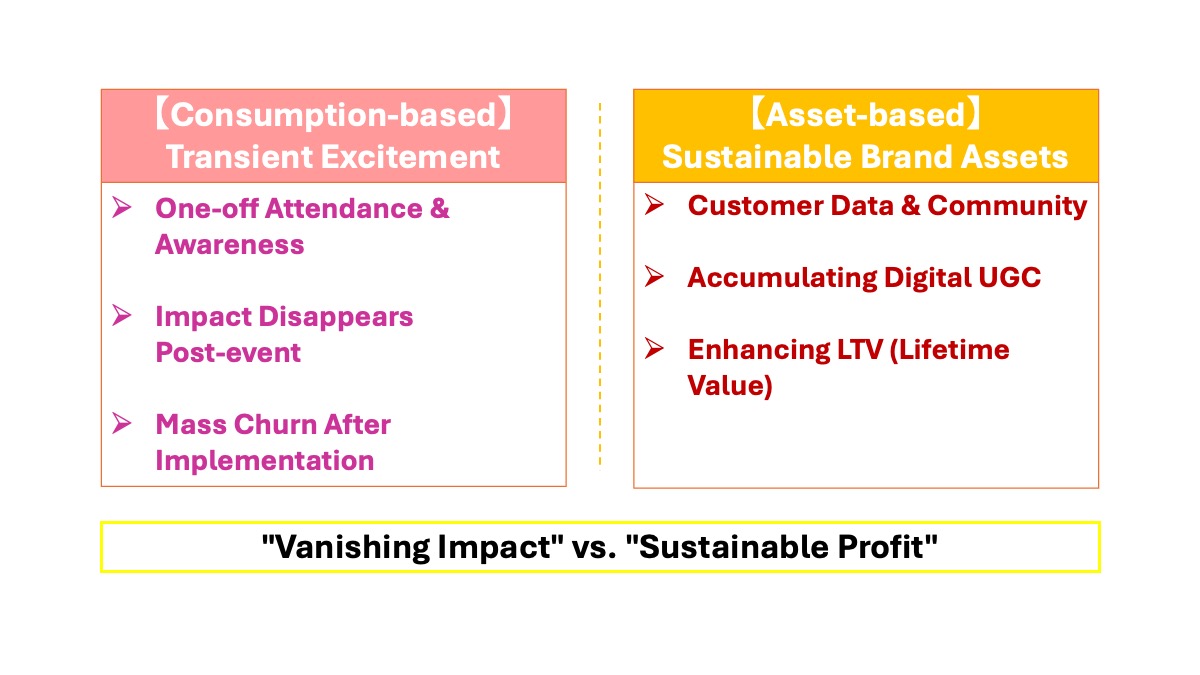
Summer event promotion is a marketing strategy that provides special brand experiences to consumers in an open state of mind to build medium- to long-term relationships. With the increase in long holidays and outdoor activities, consumers’ range of action expands significantly during summer, making it an ideal opportunity to create deeper touchpoints than during regular periods. However, what is crucial in modern promotion is not a “consumption-type” initiative that ends with a one-time excitement, but an “asset-type” perspective that generates future profits. First, let’s examine the characteristics and differences between initiatives that end in short-term consumption and those that accumulate as assets.
[Related article]Successful PR promotion methods using events: 15 approaches and tips for success « Column
The Marketing Value of Summer Events
The value of holding events in summer lies in the fact that people’s hearts are more easily moved, and their desire to share information externally is significantly heightened. Rising temperatures are thought to create psychological changes that lead to an open and active mood; therefore, even typically cautious individuals may be more willing to participate in special experiences unique to summer. By leveraging this high level of enthusiasm, you can leave a deep, positive impression of the brand in their hearts as a memory. Especially for families who cherish summer vacation memories and the younger generation conscious of “Instagrammable” moments, high-quality event experiences delivered by companies hold special value beyond traditional advertising and will transform into precious assets that support the brand.
The Difference Between Consumable and Asset-Building Initiatives
A common failure for many companies is investing large budgets into initiatives that are “consumed” on the spot, such as mass sampling or one-off performances. While these can increase temporary awareness, they often neglect to convey the true merits of the product or service, potentially causing the connection with the brand to end with the season. On the other hand, “asset-building” initiatives repurpose the successful experiences gained at events as digital content or utilize attendee attribute data for CRM (Customer Relationship Management). For example, User-Generated Content (UGC) voluntarily posted by participants remains online after the event, becoming a valuable digital asset that supports brand credibility and helps achieve top-of-mind awareness as the brand associated with summer. Designing the mechanism for “assetization” in advance is the turning point for truly successful summer event promotions.
Factors Leading to the Failure of Summer Event Promotions
When planning summer event promotions, chasing only immediate figures can lead to medium- to long-term failure. Here, we summarize common failure patterns and their underlying reasons.
| Characteristics of Failing Projects | Primary Factors | Resulting Outcomes |
|---|---|---|
| Goals limited to attendance numbers | Dependence on incentive campaigns like discounts and perks | Mass customer churn after the event ends |
| Focusing only on eccentric buzz-making | Lack of brand context | ・Forgotten as a transient consumption ・Risk of creating a negative impression on existing users |
| One-way messaging | Neglect of customer experience | Failure to generate empathy or leave a memory |
| Lack of customer perspective & excessive corporate-centric bias | Increased likelihood of negative comments on social media and the web during and after the event |
Designs That Only Chase Attendance Figures
Setting the goal of an event solely as customer mobilization increases the likelihood of promotion failure. By chasing superficial numbers like attendance, the crucial perspective of conveying the brand’s true value can be lost. Measures such as offering excessive discounts or expensive novelties may succeed in gathering people temporarily, but the participants’ purpose shifts from “experiencing the product or brand” to “obtaining perks.” As a result, the connection with the customer may be severed as soon as the event ends. Designs aimed only at immediate attendance may appear to spike sales in the short term, but they rarely contribute to long-term fan building.
Projects That End Only with Buzz
Projects that target only superficial buzz, such as social media virality, also increase the likelihood of ending as transient consumption. While generating buzz is not inherently bad, it cannot be considered a sufficient result if it is not accompanied by the brand’s philosophy or message. For example, events that only seek buzz—such as collaborations with popular IPs that have no affinity with the company—might temporarily clutter social media timelines, but participants may only remember that they “took a funny photo” and could easily overwrite that memory with a new topic the next day. Buzz-making is merely a means and must function as an entry point for telling the brand’s story.
Insufficient Connection Between the Event and the Brand
Even if an event itself is successful in terms of excitement, mobilization, and buzz, it will be difficult to link to corporate business if the subsequent connection to the brand is insufficient. If the event content and the brand context are disconnected, participants are likely to leave with only the impression of a “fun summer event,” without deepening their attachment to or understanding of the company. Efforts are required to relate the event to the brand so that the values and stories the company cherishes can be conveyed through the experience.
Lack of Experience Design
Events that lack “experience design” and merely push messages the company wants to convey are unlikely to be etched into customers’ memories. Modern consumers are exposed to vast amounts of information daily and unconsciously develop a wariness toward advertising tailored to corporate convenience. An exhibition-style format that only provides one-way explanations of a product’s superior performance is a typical example. Participants remain in a passive state of just listening to explanations and do not gain opportunities for their hearts to be moved within the event. Instead of the company speaking about what it wants to say, the first step toward a memorable project is the perspective of experience design: what the customer wants to experience, how to move their emotions, and how to make them want to come back.
Commonalities of Successful Summer Events
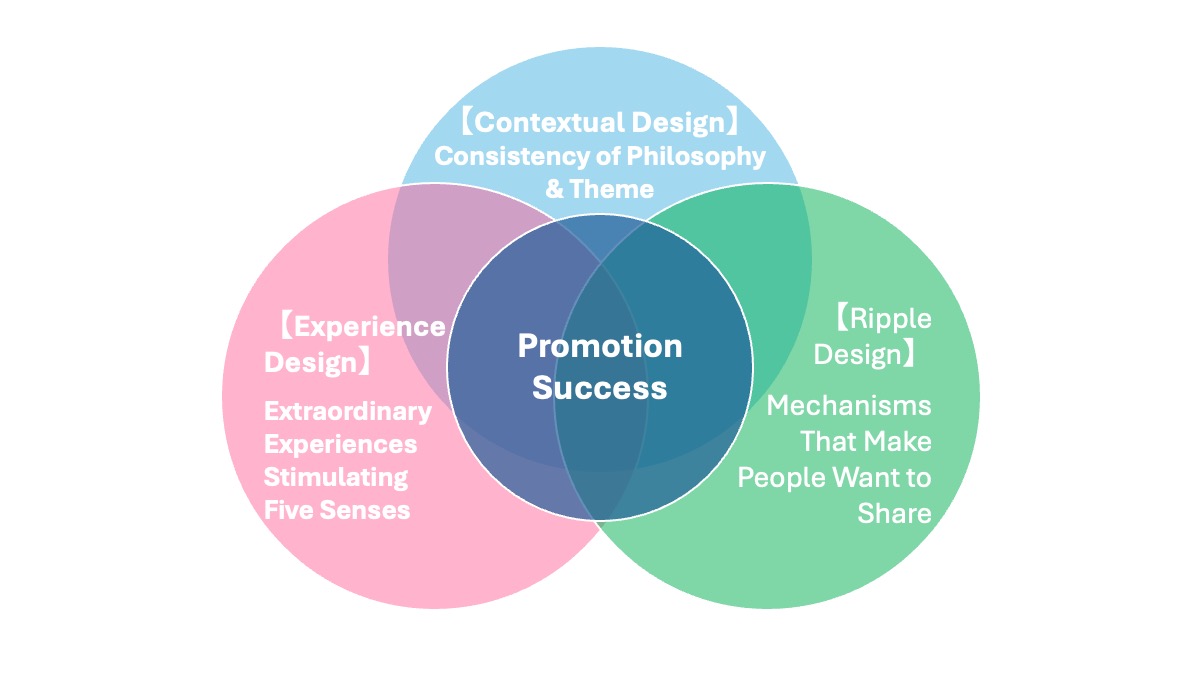
There are commonalities among initiatives that achieve results amidst numerous promotions. To lead a summer event promotion to success, one must not rely on accidental excitement. Constructing a meticulously calculated strategic foundation is the most important approach. First, let’s look at the three elements that successful events possess.
[Related article]How can you make event PR successful? From planning steps to success stories « Column
Contextual Design Consistent with Corporate Value
When planning a summer event, simply incorporating a sense of the season is insufficient. “Contextual design” is necessary to deeply link the company’s unique values with the event’s theme. Contextual design refers to the task of logically connecting the brand message and the consumer experience so there are no contradictions. It is precisely because there is a consistent message that consumers feel strong empathy toward the brand.
Experience Design That Moves Emotions
After defining the message from the company, experience design is needed to deliver it to participants. Utilize unique elements like summer heat and the sense of openness to stimulate the five senses. It is important to provide surprises that exceed expectations and extraordinary moving experiences, rather than just displaying products. Experiences and memories that move emotions will remain intensely and should transform into long-term attachment to the brand.
Design for Ripple Effects on Social Media and News Outlets
Even if you prepare a wonderful experience, it is a great waste to let it end with the participants alone. Successful events have mechanisms to ensure information reaches people outside the venue. Motivation to share photos generates UGC (User-Generated Content). By strategically creating buzz, the effects of the event promotion expand.
What Is Summer Event Promotion from a PR Perspective?
To avoid failure in summer promotions, we recommend incorporating a “PR (Public Relations)” perspective into event promotion, going beyond the framework of immediate sales promotion and advertising. Here, we explain the specific points of what event design with a PR perspective looks like.
Aiming for Brand Accumulation, Not Just Buzz
When designing event promotions from a PR perspective, the goal is not just a transient “buzz” or virality, but the medium- to long-term “accumulation” of trust and positive impressions toward the company or brand. Instead of aiming for one-off sales or mobilization, it is necessary to position a single event as part of corporate activities throughout the year. By viewing events as a line rather than a point and aligning with consumer insights, you can ultimately build a long-loved relationship. Events are not one-off occurrences but a steady means of increasing the “credit” of brand trust.
Designing Seasonality x Social Context
The basis of PR is to design by combining the seasonality of “summer” with “what society is currently interested in (social context).” If you proceed solely on corporate logic like “because it’s summer,” it may lead to a gap with the public mood and the risk of unintended criticism. For example, an event targeting only buzz in extreme heat might be perceived as “lacking consideration for safety.” Always maintain an objective perspective on how your event connects with public interests or social issues—such as “heatstroke prevention” or “summer energy saving”—and how the initiative will be received by society to design a context that generates empathy.
How to Incorporate Corporate Messages
How to incorporate the messages your company wants to convey into the event is also a key point. Rather than pushing corporate messages one-sidedly, efforts are needed to ensure the philosophy is naturally conveyed through the participants’ “experience.” For example, an approach could involve leveraging the context of long-standing environmental protection activities to conduct a participant-based energy-saving program at a summer event. By designing it so that participants naturally encounter the company’s thoughts while having fun, the event will not end as just a “fun time” but will lead to deep understanding and empathy for the brand.
How to Design Memorable Summer Events
After understanding the PR perspective, designing an event that actually remains in the customer’s memory requires an approach based on the characteristics of human cognition and behavior. Here, we explain four specific steps and design methods for creating memory retention and brand empathy.
| Design Elements for Remaining in Memory | Specific Methods | Expected Effects |
|---|---|---|
| 1. Understanding User Behavioral Psychology | Analysis of summer-specific needs and behavior patterns | Cognition formation, top-of-mind awareness, and building a foundation for customer mobilization |
| 2. Designing Emotional Fluctuations | Creation of moving experiences, surprises, and empathy through participation | Strong attachment to the brand and memory retention |
| 3. Design for Secondary Utilization | Event experience design easy for media to report, provision of materials and fact-based documents | Ripple effect of brand value to non-participants |
STEP 1: Analyze and Capture the Summer Behavioral Psychology of the Target
The first step in event planning begins with analyzing the psychology of the main target audience regarding what actions they take and what they seek during the “summer” season. For example, summer-specific insights are diverse, such as “wanting to spend time comfortably indoors to avoid extreme heat,” “wanting to use summer vacation for extraordinary experiences even if it costs money,” or “wanting to make good memories with family during the Obon holidays.” Increasing the resolution of the target and accurately capturing the “summer motivations” that make them want to visit of their own accord serves as a solid foundation for memorable event design.
STEP 2: Design an Experience Concept That Moves Participants’ Emotions
After capturing the target’s psychology, design an experience concept that meticulously incorporates the participants’ emotional fluctuations. People tend to remember the movement of emotions—”how they felt at that time”—more strongly than the information itself. Plan by working backward to determine where to place the emotional peaks, from the sense of expectation the moment they enter the venue to the surprises and realizations through the experience, and the lingering afterglow upon leaving. For example, an event utilizing the summer night sky could contrast a quiet time for observing stars in the dark with a moving moment of releasing lanterns all at once at the climax, thereby etching a deep impression in the participants’ hearts.
STEP 3: Anticipate Secondary Utilization in News Outlets and Social Media
To deliver the brand message to people who cannot come to the event venue, it is required to include the flow of “secondary utilization”—where the event is picked up as news in reports or spreads across social media—in the plan from the beginning. Present “social significance” or “novelty” that makes the media want to cover it in a press release, and simultaneously prepare experiences that participants will instinctively want to share with someone. Rather than just creating “Instagrammable” spots within the venue, provide a context that makes people want to say in their own words, “I gained new insights through this experience,” and design a mechanism to ripple the venue’s enthusiasm to the outside.
STEP 4: Establish Pathways for Continued Brand Contact After the Event
Do not end the interaction just because the event is over; design pathways so that the relationship continues after returning to daily life. A summer event is merely one hook for long-term relationship building. Efforts are needed, such as releasing exclusive advance information for participants, inviting them to limited-time online communities, or distributing kits that allow them to continue the event experience at home. If you can prepare mechanisms that remind them of the moving experiences or learnings from the event in their daily lives from autumn onward, you can work toward building a regular relationship with customers. Aim for an overall design of brand communication that connects the dots of each initiative into a line.
[Related Article]What is Fan Marketing? Explaining How to Build a Long-Loved Brand from a PR Perspective! « Column
KPI Design and Evaluation Methods for Summer Events
To lead a summer event promotion to success, clear goal setting before implementation is necessary. To correctly evaluate how it contributed to business growth, design appropriate KPIs (Key Performance Indicators).
| Evaluation Perspective | Examples of Specific Indicators (KPIs) | Purpose of Measurement |
|---|---|---|
| Behavior/Experience | Dwell time, number of survey responses obtained | Understanding the enthusiasm at the venue and the deep engagement of participants |
| Diffusion/PR | Number of posts with designated hashtags on social media Engagement indices for each post |
Measuring information reach outside the venue and word-of-mouth ripple effects on social media, the web, etc. |
| Brand Effect | Increase in branded search volume, changes in favorability | Confirming improvements in medium- to long-term corporate value and purchase intent |
Indicators That Cannot Be Measured by Attendance Alone
In past event evaluations, there was a tendency to place the most importance on the “number of attendees” on the day. However, in summer event promotions, “qualitative” indicators that measure the deep experience of participants are also important. By measuring average dwell time at the venue and the number of survey responses, the true cost-effectiveness should become apparent. Furthermore, recently, the number of concurrent viewers in live streams on video platforms has become an important event indicator from a digital marketing perspective. Even if a physical offline venue has a capacity of several thousand to 10,000 people, some events have concurrent viewers in the tens or hundreds of thousands, so consider and design which method suits your company.
Social Media Diffusion and Media Exposure
To evaluate the influence outside the venue, analyze the status of information diffusion online. The number of posts with designated hashtags and the record of exposure in web media are important evaluation criteria. By collecting and analyzing data on the acquired PR value and utilizing it for the next step, you should be able to prove the social influence of the event.
Brand Lift and Branded Search
To know if an event functioned as a corporate asset, medium- to long-term effect measurement is necessary. Be sure to check brand lift (improvement in favorability) surveys and the volume of branded searches after the event. It is necessary to visualize whether consumer interest translated into actual action and link it to the next marketing initiative. Consider the next business moves while sharing how things changed before and after the implementation with other departments within the company.
To Ensure Summer Event Promotions Do Not End as One-Offs
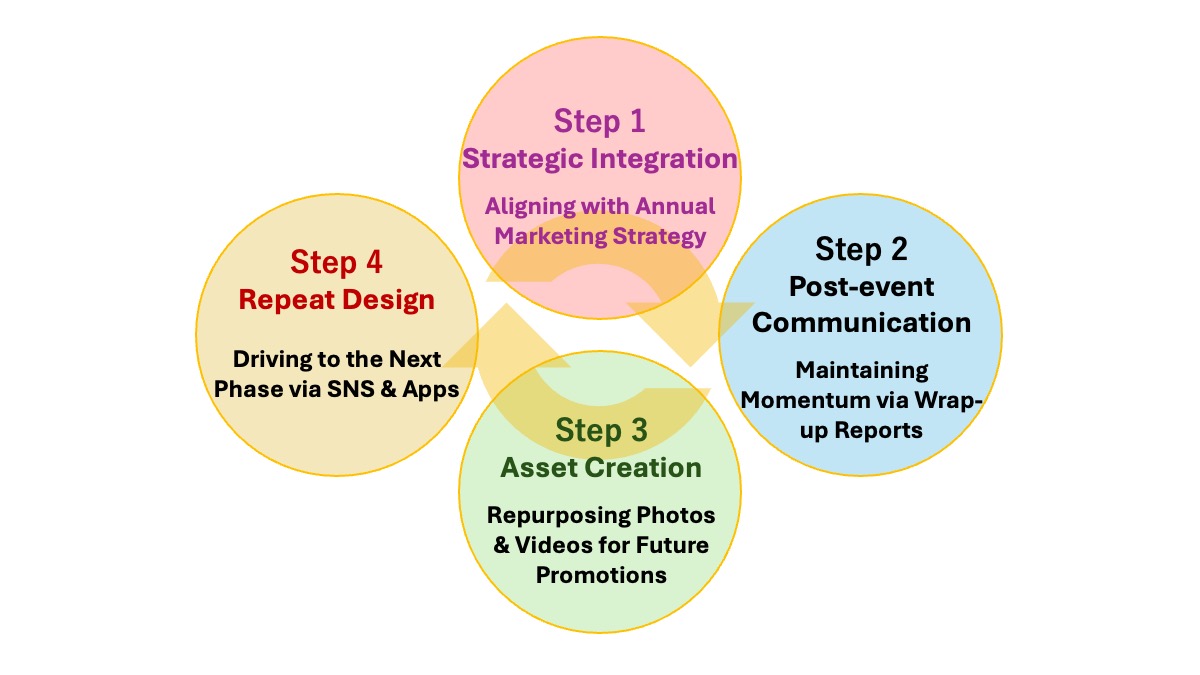
Summer event promotions do not end when the event is over. It is important to maintain the connection with the acquired customers and build a long-term relationship. Let’s check the perspectives below to ensure that your valuable investment does not end with a one-time burst of excitement.
Combine with Annual Strategy, Not Just the Event Alone
This is not limited to summer event promotions, but maintain a perspective of viewing things as a line rather than a point, including new product events. It is important to consider how to position summer initiatives within the marketing strategy throughout the year and design the rollout of measures. For example, use a summer event as a place to experience a new product launched in spring, leading to a new product release in autumn. By drawing the overall scenario first, brand touchpoints with customers will increase strategically, and understanding of products and services should deepen further.
Design Not Just the Buzz on the Day, but the Post-Event Communication Plan
Excitement on the day of the event is, of course, important. What you want to focus on further is establishing an information dissemination plan to maintain enthusiasm after the event ends. Introduce photos and impressions posted by participants on official accounts and distribute content to enjoy the afterglow. By strategically disseminating post-event reports and videos, you can deliver the appeal even to those who did not participate.
Assetize Event Experiences as Digital Content
The excitement generated at an event and the real voices of participants are valuable marketing assets for a company. Do not let it end as a one-time experience; accumulate photos and videos as official digital content. This is called “content assetization,” and it is continuously utilized for medium- to long-term PR activities. By publishing on special sites or secondary use as sales promotion materials for the following year, it becomes material to maximize the return on investment of the promotion. If you also summarize quantitative indicators such as attendance, media coverage, and last year’s cost-effectiveness into documents, they will become useful corporate assets from next year onward.
Create a Repeat Design Leading to the Next Initiative or Continuous Contact
There is a strong demand for creating specific mechanisms to prevent the relationship with participants from being severed. Encourage registration on official social media or downloading of official apps to create a state where continuous contact can be maintained digitally. By releasing information there, such as the next event promotion announcement or advance release information for new products, it becomes a trigger to guide them toward repeat visits or purchases. A repeat design that naturally leads customers to the next action directly links to the formation and cultivation of an enthusiastic user community for the brand.
Benefits of Hiring a PR Company
When planning an event solely in-house, there is a tendency for the company’s own feelings and sales elements to become strong. By welcoming a PR company with a PR/publicity perspective as a partner, objectivity is guaranteed in the planning, and its quality should improve significantly. Here, we explain the specific benefits obtained by utilizing an external specialist company when designing a summer event in-house is difficult.
Ensuring Objectivity in Planning
By involving a specialist company, you can incorporate an objective perspective of how the company is viewed by society into the planning. When completed only within the company, it is not uncommon to be caught up in appealing the strengths of products or services, resulting in a gap with public interest. For example, even for a simple technical exhibition, a PR company can convert it into a “perspective that solves consumers’ problems” and propose an approach that is easy to convey to the target. A major strength is the ability to prevent corporate self-centeredness and accurately correct gaps in perception with society.
Maximizing Media Exposure
By borrowing professional expertise, you can design a context from the initial stages that is easy to report as news, aiming to maximize media exposure. Media outlets rarely visit for coverage based solely on a new product announcement or corporate advertisement. Since PR companies are well-versed in journalists’ interests and social trends, they can provide accurate advice on angles with news value that lead to reporting, such as solving social issues. As a result, it becomes possible to obtain social trust and broad awareness through the media without relying on large advertising costs.
Integration with Brand Strategy
Events can be firmly integrated with the company’s medium- to long-term brand strategy rather than ending as one-offs. To accumulate positive impressions of the brand, consistent messaging without deviation is essential. Through collaboration with a PR company, you can draw an overall picture of how to connect the enthusiasm and customer touchpoints generated at a summer event to initiatives from autumn onward. By constructing a blueprint for continuous communication with a specialist company, you can establish a brand image while aiming for continuous buzz for customers.
To succeed in summer event promotions, experience design that moves the hearts of attendees is indispensable, not just the ability to mobilize customers. SUNNY SIDE UP’s event services cater to a wide variety of event formats, including sampling events, touch-and-try events, new product launches, tasting events, and exhibitions. Centered on a PR perspective, we provide total support for the entire process from planning to operation, including attendee flow design, production, casting, and media invitation. By incorporating “mechanisms” that make attendees want to share on social media, we also lead to high-energy information diffusion unique to the summer season. If you are considering a summer event promotion, please feel free to consult us.
Commonalities in Summer Event Cases That Enhanced Corporate Value
We have picked up promotion cases related to summer events. Please take a look at them as a reference for event planning, including PR techniques that make it easier to be picked up by the media and mechanisms that leave an impression of the brand on consumers.
A Bon Odori Festival That Incorporated the Seasonality of “Summer” into a PR Context
Reference:Shibuya’s New Summer Tradition: “Shibuya Bon Odori Festival” « Results
A Festival Event That Enhanced News Value by Combining with Anniversaries and Seasonal Events
Reference:Azuki Bar Festival 2025: Held Simultaneously at 4 Venues in Tokyo, Nagoya, Osaka, and Mie « Results
Summary
The common element in successful summer events is not one-sidedly conveying the company’s claims, but clearly linking people’s true feelings with social issues. Instead of focusing only on transient figures like the number of attendees, emphasize plans for building a relationship that continues even after the event ends.
By preparing experiences that appeal to all five senses and providing triggers that make people naturally want to mention or empathize on media and social media, an event grows into a powerful PR and publicity asset. Precisely because summer is a time when hearts become open, it is important to value careful dialogue with customers and consideration for subtle emotional movements. The process of building daily trust is what creates unique brand value that other companies can never imitate.
When planning a summer event promotion, how you design an experience that remains in the hearts of attendees, in addition to customer mobilization power, is the key to enhancing brand value. SUNNY SIDE UP plans and operates a wide range of events, including sampling events, touch-and-try events, new product launches, tasting events, and exhibitions, centered on PR-based thinking. By implementing mechanisms that consider the flow and psychological state of gathered customers, we can create excitement on the spot while also leading to expanded media exposure. If you are considering an event promotion that leverages the seasonality unique to summer, please feel free to contact us.