What is News Value? Explaining How to Create and Deliver Information That Gets Media Coverage
- カテゴリ:
As a public relations representative for a company, it is only natural to want more people to know about your company’s new services and initiatives. To that end, you may be working hard every day to distribute press releases and provide information to the media. However, are you struggling with the fact that your information is not being picked up by the media? The reason for this may be that the information you are sending out lacks “news value.”
This article explains everything from the basics of news value, which is the key to building media relations, to how to increase its value, and the specific steps to deliver it to reliable media.
What is News Value? The Value of Information Media Seeks
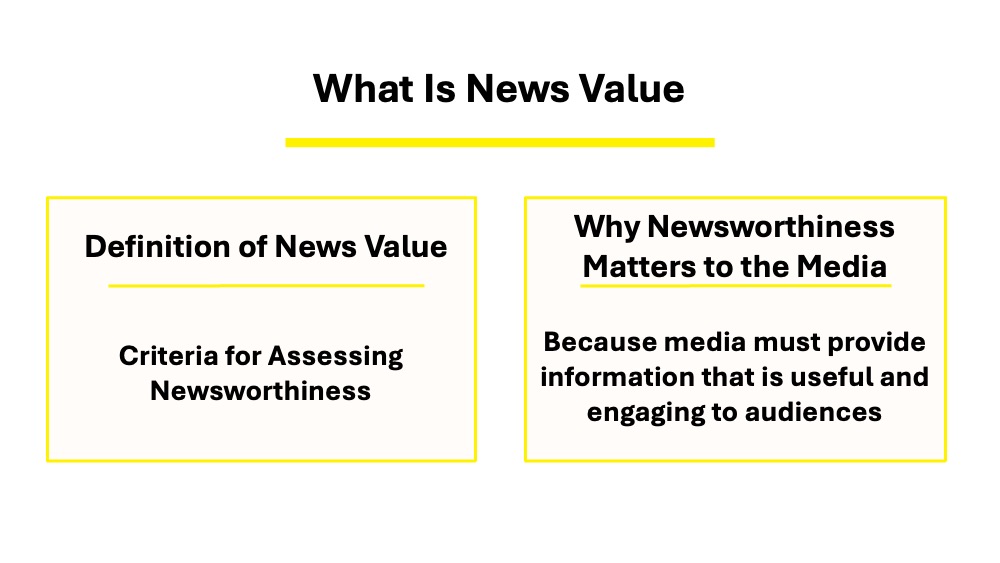
So, what exactly is “news value,” which is the key to media relations? Let’s delve into its definition and why the media values it.
Basic Definition of News Value
News value is a criterion for judging “how much value a certain event or piece of information has as news to be reported.” It is also translated as “news value” or “reporting value” in Japanese. The media is constantly selecting which information to deliver to readers and viewers from the vast amount of information available every day. The criterion for this decision is this news value. Information judged to have high news value is more likely to be featured prominently.
Why Do Media Emphasize News Value?
The mission of the media is to provide readers and viewers with useful and engaging information. They are constantly looking for information that people in the world feel they “want to know,” “find interesting,” and “consider important.” If the media only reported information that did not attract readers’ interest, the value of the media itself would decline, leading to a loss of readers. Media professionals always rigorously evaluate information from the perspective of “Will readers read this article?” and “Will this news attract attention?”
It is important to understand that public relations materials such as announcements of new products and services, business announcements, survey data, and event announcements that companies send out are no exception, and are judged through the media’s filter of “Is this worth covering as news?”
Media’s Judgment! 10 Elements of News Value
News value cannot be measured by a single standard, but is judged by a combination of multiple factors. Here, we will introduce 10 representative judgment factors. Please read on while checking which elements your company’s information satisfies.
| Elements | Description | Specific examples |
|---|---|---|
| ① Novelty and originality | New information that has never existed before, unique perspectives that cannot be obtained elsewhere |
Development of new technologies Launch of the industry’s first service Announcement of original survey results |
| ② Timeliness and social relevance | Relevance to current trends, social issues, seasonal topics, etc. |
SDGs initiatives Introduction of new systems related to work style reform Seasonal events |
| ③ Influence | How much impact does it have on people’s lives and society? | Provision of new services accompanying legal revisions Large-scale price revisions Updates to products used by many people |
| ④ Unexpectedness | The element of surprise that overturns general common sense and expectations | New entry from a different industry Innovative product development by long-established companies Unexpected collaboration |
| ⑤ Humanity | A story or drama that appeals to people’s emotions. | Behind-the-scenes stories from developers Founder’s philosophy Stories of employees overcoming difficulties |
| ⑥ Numerical values, records, and controversial issues | Record-breaking and rare value, such as “world’s first,” “industry No. 1,” or “limited edition.” | Achievement of a Guinness World Record 100th anniversary event Release of limited-quantity products |
| ⑦ Regionality | Contributing to a specific local community or being a topic unique to that region |
Holding local revitalization events Collaboration with local companies Development of locally limited products |
| ⑧ Comparative structure/controversial issues | The existence of a conflicting structure of opposing opinions that provoke both approval and disapproval. |
Comparison of new and old technologies Clear differentiation strategy from competing companies |
| ⑨ Visual appeal | Impressive images and photographs that look good on television and web media. | New products with beautiful designs Scenes from unique events Impactful demonstrations |
| ⑩ Usefulness and practicality | Practical information that is useful for the lives of readers and viewers. | New services that lead to shorter working hours Saving tips Information useful for maintaining health |
① Novelty/Originality: New Discoveries and Information
The most basic element of news value is “novelty and originality.” As the word “NEWS” suggests, information is all about freshness, and the media is constantly seeking information that has not yet been released to the world. This includes, for example, the announcement of new products and services, and the development of innovative technologies. Even information that is already known can be given news value again by adding a new perspective or added value. The important thing is to clearly communicate “elements that have never existed before” and highlight the differences from others.
② Timeliness/Social Relevance: Relevance to Matters of Public Interest
The “timeliness and social relevance” of how much the information is related to the current trends in the world also greatly affects news value. By linking it to the concerns and trends of society as a whole, and seasonal topics, its value as news is greatly enhanced. For example, new services that support rapidly spreading electronic payments, and products that fulfill the “cost-effectiveness” and “time-effectiveness” that modern people value, attract the attention of many media outlets. In addition, information on products and services that match seasonal events is also likely to be treated as news with timeliness.
③ Impact: Involving Many People
The “influence” of how much the information affects the lives of many people and society as a whole is an important factor in determining the size of the news. The wider the scope of influence, the higher the news value. For example, revisions to laws that are enforced nationwide, and major changes to public transportation that many people use, tend to be treated as top news because of their large impact on society as a whole. On the other hand, even information about a specific industry can be judged to have a significant impact if it is an event that shakes the entire industry.
④ Unexpectedness: Surprise that Overturns Common Sense
The “unexpectedness” that surprises people with “no way” is also a powerful element that enhances news value. Information that overturns conventional wisdom and stereotypes strongly attracts people’s attention. For example, news such as “a long-established company enters a completely new and different industry” or “the unexpected development story of a product that everyone knows” is likely to become a hot topic due to the gap and surprise. Unexpected combinations and results that betray expectations give information an impact and make it easier to remember. You can find the value of news by looking for unexpected angles in commonplace information.
⑤ Humanity (Human Interest): Stories that Appeal to People’s Emotions
Not only facts and data, but also “humanity (human interest)” that appeals to people’s emotions is a very important element in news. The stories of people who have overcome difficulties and the success of people who are making great achievements at the forefront of business resonate with many people. For example, the production story of a developer behind a certain product development and the thoughts of the founder put into social contribution activities are conveyed as stories that move people’s hearts beyond mere corporate news. It is easier for readers and viewers to empathize with the story and relate it to their own experiences, making it resonate more deeply with their hearts.
⑥ Numerical Values, Records, Scarcity: “First in Japan,” “Best in the World,” etc.
“Numerical values, records, and rarity,” such as “first in Japan,” “only in the industry,” and “highest ever,” are elements that easily enhance news value. People are strongly attracted to things that are limited in number or rare events that rarely occur. For example, achieving a Guinness World Record, and high-value products sold as Japan-only models, limited quantities, and limited periods fall into this category. The record itself becomes news, increasing the likelihood of it being picked up by the media. Words that convey superiority such as “number one” and keywords that easily convey high rarity such as “limited” are effective in highlighting the value of information and differentiating it from the market and competitors.
⑦ Locality: Information Closely Tied to a Specific Region
Even if it is not big news nationwide, there is information that is very valuable to people living in a specific region. This is “locality.” For example, the opening or renewal of local commercial facilities, the development of transportation infrastructure such as new stations, airports, and railways, the holding of events that lead to regional revitalization, and demonstration experiments in which local governments and companies collaborate are all matters of direct concern to people living in the region. Local media are constantly seeking close-knit information that is useful to the residents of the area. Even topics that are difficult to handle in national newspapers can be picked up by local newspapers, television, and web media by focusing on locality.
⑧ Comparative Structure/Controversial Issues: Clash of Different Opinions
Themes with a “comparative structure/controversial issue” in which opinions are divided in society stimulate people’s desire to participate and have a strong news value that is easily consumed as entertainment. Examples include conflict structures with affection such as “〇〇 faction vs. 〇〇 faction,” and structures that challenge established concepts such as “conventional industry wisdom (high price) vs. new proposals that overturn common sense (high quality, low price).” Even with a simple new product announcement, the media can easily create projects such as “comparative verification” and “street interviews” by presenting a “conflict axis” in the press release, such as a format that asks “Which one are you?” or a new solution to old customs, and the probability of it being picked up as a topic increases dramatically.
⑨ Visual Appeal: Impact of Images and Photographs
In today’s world, where television, web media, and influencers are the main sources of information, “visual appeal” is an indispensable element in determining news value. Impressive photographs and impactful images sometimes convey things more eloquently than many words. For example, shocking images from disaster sites, photographs capturing decisive moments of athletes, live images that convey the heat and experience of the site as is, and beautiful designs that convey the innovativeness of products at a glance attract viewers’ attention and increase interest in the news at once. When distributing press releases, etc., it is very important to imagine the scene in which the article will be published and attach attractive and high-quality photographs and video materials that are easy for the media to use in order to increase the possibility of the article being published.
⑩ Usefulness/Practicality: Information Useful for Daily Life
Information that is directly useful for people’s lives and work also has high news value. Many people are looking for specific information to improve their lives. For example, new research results on health, product information with high “cost-effectiveness” that helps household finances, services that excel in “time-effectiveness” that effectively utilizes limited time, and introductions to new tools that increase work efficiency are beneficial information that readers and viewers “should know.” By specifically showing how new technologies developed by companies contribute to solving social issues and make people’s lives more convenient, the information becomes valuable as practical news.
Strategic media utilization is essential for disseminating information with high news value. SUNNY SIDE UP utilizes the characteristics of various media such as TV, newspapers, magazines, and the Web to design consistent media strategies from awareness acquisition to customer behavior. We maximize the information value of your company with total solutions from media buying to creative development. If you are considering an effective media mix, please see details about SUNNY SIDE UP’s media services.
Media | Services | PR Company | SUNNY SIDE UP Inc.
Enhance News Value! 3 Steps for Information Dissemination
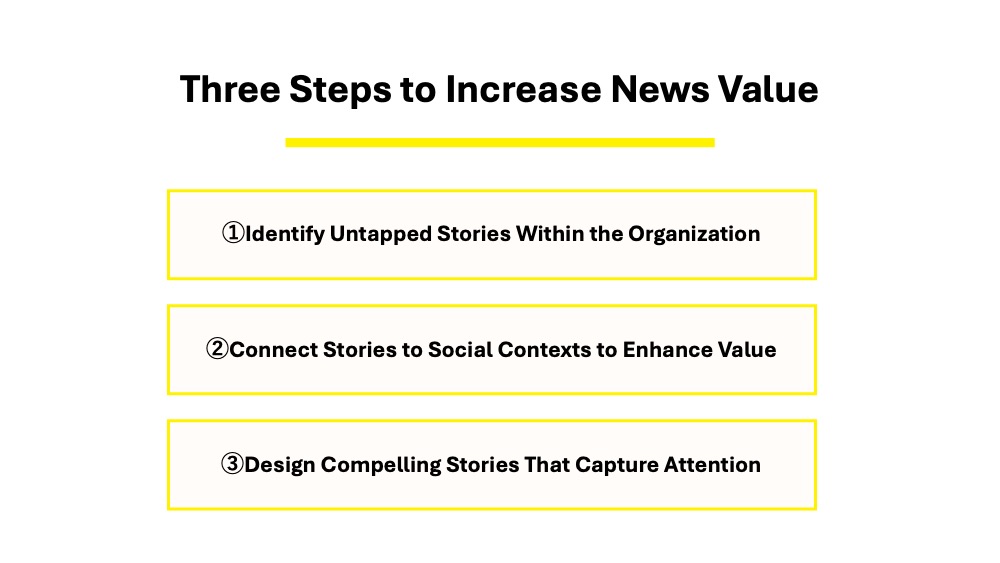
News value is not something that is given, but something that you create yourself. Here are three steps to refine information sleeping within your company into something with high news value.
Step 1: Discover “Rough Stones of Topics” Sleeping Within the Company
Instead of just the public relations department looking for topics, let’s keep an eye out throughout the company. The development department may have information on new technologies, the sales department may have real voices of customers, and the human resources department may have information on unique internal systems. Create a system for regular hearings and information sharing, and actively discover “raw gems of topics” scattered throughout the company. Even things that you think are commonplace may become fresh news from a social perspective.
Step 2: Connect with the Context of Society to Enhance Value
In some cases, it may be difficult to turn the “raw gems of topics” that you have discovered into news simply by disseminating them as they are. That’s where the work of connecting with the “context” of social trends and times becomes important. For example, the information of a simple “new product launch” can be connected to the context of “increasing interest in environmental issues” and disseminated as a “sustainable new product that is environmentally friendly,” which adds social relevance and increases news value. Always keep an eye on social trends and think about which context to put your company’s information in to increase its value.
Step 3: Design a Story and Make Information Look Attractive
People are more moved by stories than by mere lists of facts. Why was the product developed, what difficulties were overcome, and what value do you want to provide to society? By drawing the story behind the scenes, the news value of “humanity” of the information is enhanced. By conveying not only the specifications of products and services, but also the thoughts of the developers and the company’s philosophy behind them, you can gain the empathy of media professionals and create news that remains in the hearts of readers.
Build Trust! How to Deliver News Value to the Media
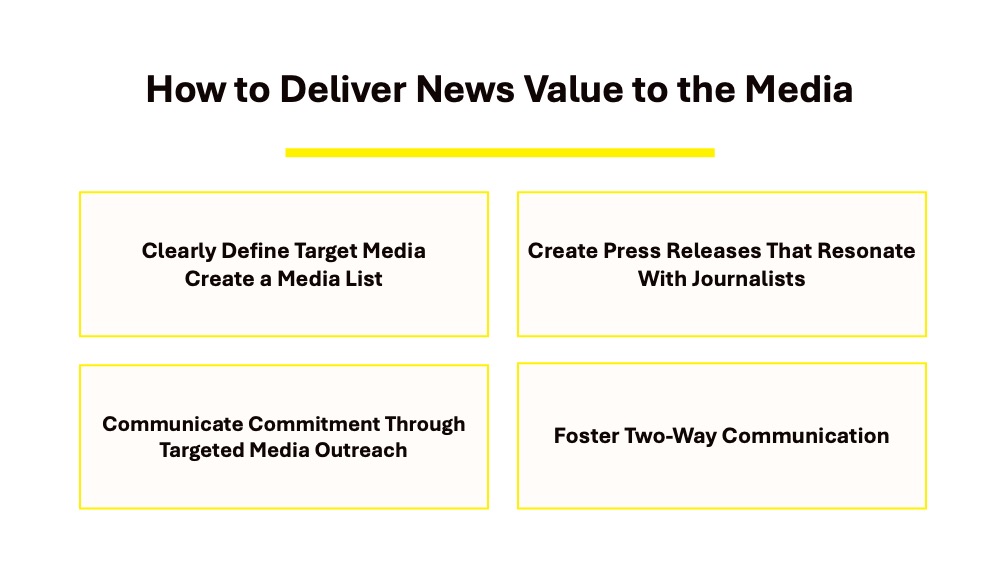
Even if you have prepared information with high news value, it is meaningless if it does not reach the appropriate media. Here, we will explain the specific methods to effectively deliver information while building a relationship of trust with the media.
Create a Media List to Clarify Target Media
First, start by listing the media you want to deliver your company’s information to. Instead of sending it to a large number of media indiscriminately, it is important to carefully select media that have high affinity with your company’s industry, products, and target audience. Create a list from a multifaceted perspective, including not only national newspapers and television stations, but also industry-specific magazines and Web media that handle specific themes. The key to success is to increase the accuracy of the list by understanding not only the media name, but also the department in charge, the names of individual reporters, and the trends of past articles.
Create a Press Release That Resonates with Reporters
A press release is an official notification document to the media and is the most basic approach. The important thing is to write it so that reporters can “understand the news value at a glance.” Clearly convey the conclusion in the title and lead sentence (summary sentence at the beginning), and briefly explain why this is news. In the main text, include social background, objective data, and comments from people involved to increase the reliability of the information. Finally, don’t forget to clearly state the contact information and prepare a system that allows you to respond to interviews at any time.
Convey Enthusiasm with Media Promotion (Individual Approach)
In addition to distributing press releases all at once, an individual approach (media promotion) is effective for particularly important media. Tell them specifically why you want to provide information to that reporter and which part of the article you can contribute to by phone or email. Read the reporter’s past articles and check and understand the nuances of the media’s programs, corners, and articles in advance, such as “I have read the article 〇〇. I believe that the information this time is highly relevant to that theme,” to convey your enthusiasm and sincerity.
However, it requires a huge amount of time and specialized know-how to identify the best reporter from among the many media outlets and conduct thorough research and approach them individually. If your company’s resources are limited or you want more reliable results, it is also an effective strategy to ask a partner company that is a professional in media relations.
We at SUNNY SIDE UP will transform your information into “news that reaches the world” through our strong media relations cultivated over many years and strategic communication design based on PR ideas. We not only distribute information, but also provide total support for the process from building relationships with reporters to publishing articles.
Service | PR Company | SUNNY SIDE UP Inc. | SUNNY SIDE UP Inc.
Keep in Mind Two-Way Communication That Is Not One-Sided
Media relations is not a one-way relationship where you just send information. Aim to be a beneficial presence for media representatives by reading media articles on a regular basis, conveying your impressions, and providing related information. Even if it does not immediately lead to an article, continuing to exchange opinions and provide information will make you the first person they think of when they say, “If it’s this field, let’s ask that public relations representative.” Steady activities will lead to the construction of long-term relationships of trust.
Points to Note When Judging News Value
Finally, I would like to touch on some of the points to note that you tend to fall into when considering news value. It is important to always remember to have an objective perspective.
Understand the Difference Between “What Companies Want to Convey” and “What Media Want to Report”
Even if a new product is groundbreaking for a company, it may be judged to have low news value from the media’s perspective because its social impact is small. Always make it a habit to ask yourself, “Is this just a boast?” and “Is this really valuable information for readers?” It is essential to look at your company’s information from the perspective of society and the media, not from the logic of the company.
Too Much Advertising Will Be Avoided
The media will avoid press releases and information that are full of advertising slogans such as “It’s just about our company’s measures and campaigns.” The content should be based on objective facts and social significance, and avoid excessive adjectives and self-praising expressions. Don’t forget that the media wants to cover information in the reporting section, not in the advertising section.
Emphasize the Accuracy and Timing of Information
Providing incorrect or uncertain information will significantly damage the trust of the media. Always fact-check the information you send out to ensure its accuracy. Also, news is all about freshness. Strategically set the information embargo date and announcement timing, and be sure to disseminate it at the most effective time.
Summary
This article has explained everything from the definition of “news value,” which is the key to building media relations, to how to increase it and how to deliver it to the media. News value is a criterion for judging the value of information from the media’s perspective. By connecting what your company wants to convey with the social context and disseminating it as an appealing story, the possibility of it being picked up by the media is greatly increased. And continuing to provide valuable information will lead to building long-term relationships of trust with the media and public relations activities that support the growth of the company. Please refer to this article and review your company’s information dissemination.
Why not consult with an expert about PR strategies and media development that maximize news value? SUNNY SIDE UP designs total communication to enhance the information dissemination capabilities of companies. We propose the optimal solution tailored to your company’s challenges, from expanding awareness to promoting customer behavior. Please feel free to contact us using the inquiry form.